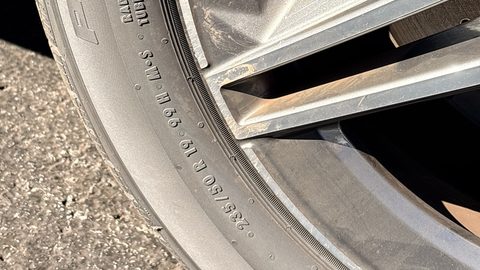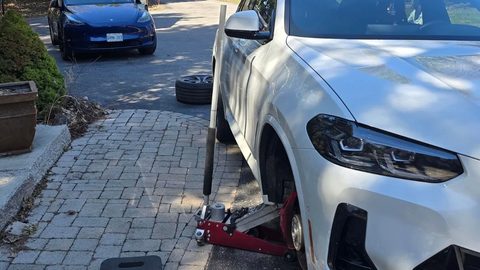

Used tires are not automatically unsafe. A nearly new set removed from a sold vehicle can be excellent value. The problem is that a Kijiji or Facebook Marketplace listing rarely shows the complete history: impact damage, poor storage, internal repairs, underinflation and uneven wear can all hide behind a clean sidewall photo.
The only reliable way to judge the deal is to inspect the exact set. The seller's description is a starting point, not a condition report. Before you send a deposit or drive across the GTA, ask for clear photos of every tire, both sidewalls, the tread across the full width, the bead area and the Tire Identification Number.
Walk away when: the seller will not show all four tires, the identification number is hidden, the set is mismatched, or the description changes when you ask specific questions.
1. Confirm the full specification
Match more than the width, aspect ratio and wheel diameter. The load index and speed rating also matter, and any replacement must be suitable for the vehicle. Check the door-jamb label and owner's manual before treating a similar-looking size as interchangeable.
For a set of four, confirm that all tires are the same brand, model, size, load rating and speed rating, with similar tread depth. For winter use, make sure each sidewall carries the three-peak mountain snowflake symbol. A set assembled from different models may respond inconsistently under braking and cornering.
2. Read the manufacturing date
The last four digits of the Tire Identification Number identify the week and year of manufacture. For example, “2323” means the tire was made in the 23rd week of 2023. Ask for a photo of the complete code from every tire because the date may appear on only one sidewall.
Age alone does not prove a tire is unusable, but it changes the risk. Storage, sunlight, heat, load and maintenance all affect ageing. Treat missing dates, conflicting stories or visible cracking as reasons to stop and get a professional opinion.
3. Measure tread at several points
Do not accept “lots of tread” as a measurement. Use a tread-depth gauge in several grooves across each tire and compare the inner, centre and outer readings. Large differences can indicate alignment, pressure or suspension problems from the previous vehicle.
Transport Canada advises against using tires with less than 4 mm of tread for winter driving. A winter tire near that threshold may still look usable in a photo but offer little remaining snow service. Also compare all four tires; a large tread-depth mismatch can be a problem, particularly on vehicles whose drivetrains require closely matched rolling diameters.
4. Inspect both sides, beads and interior
Look for cracking, cuts, bulges, exposed cords, flat spots and distortion. Check the bead - the sealing area that contacts the wheel - for tears or damage from a previous dismount. A tire sitting flat on the ground can hide sidewall damage on the bottom.
Whenever possible, inspect the interior before installation. Inside patches, plugs, liner damage and evidence of being driven while flat may not be visible from outside. Sidewall or shoulder repairs are a serious warning. If you cannot confidently interpret a repair, have a qualified technician inspect it before mounting.
5. Price the whole job
The listing price is not the installed price. Add mounting, balancing, valve or TPMS needs, disposal and the possibility that one tire fails inspection. If the set needs replacement soon, the cost per usable season may be worse than buying new tires with full tread, known history and manufacturer coverage.
A seven-question message to send the seller
- Can you send photos of both sidewalls and the tread of all four tires?
- What are the exact size, load index and speed rating?
- What are the four-digit manufacturing dates?
- What is the tread depth of each tire in 32nds of an inch or millimetres?
- Have any been plugged, patched, driven flat or involved in a collision?
- Are all four the same brand and model?
- Can they be inspected before final payment?
If the answers are vague, compare the cost of new tires through current promotions and manufacturer rebates. If you already bought a set, book mobile installation only after the tires are confirmed safe and suitable.
Get the set checked before it goes on the vehicle
Call Sparky X at 647-819-0490. We will verify fitment and inspect condition before installation; tires that fail inspection should not be installed.
Quick FAQ
Is every repaired tire unsafe? No. Repair location, method and internal condition matter. A proper internal inspection is the only way to assess an unknown repair.
Is a marketplace seller's tread photo enough? No. Measure multiple points on all four tires and inspect both sidewalls, beads and interiors.